




Cleopatra VII is often remembered as Egypt’s last queen of allure, yet her true legacy lies in her unparalleled intellect and strategic mastery. Could her influence have been rooted in her sharp mind rather than her beauty? This compelling portrayal reveals a ruler who combined scholarly pursuits, political savvy, and cultural diplomacy to safeguard her kingdom’s independence amid the rising tide of Rome. From her mastery of multiple languages and deep engagement with Alexandria’s renowned library to her skillful alliances with Julius Caesar and Mark Antony, Cleopatra demonstrated that leadership built on wisdom and adaptability can withstand chaos. Her ability to blend Egyptian tradition with Hellenistic diplomacy, leveraging knowledge as soft power, redefines what it means to be a powerful woman in history. Her enduring legacy challenges stereotypes, inspiring us to value intelligence, resilience, and cultural literacy as the true hallmarks of influence—questions that still resonate in today’s leadership landscape.
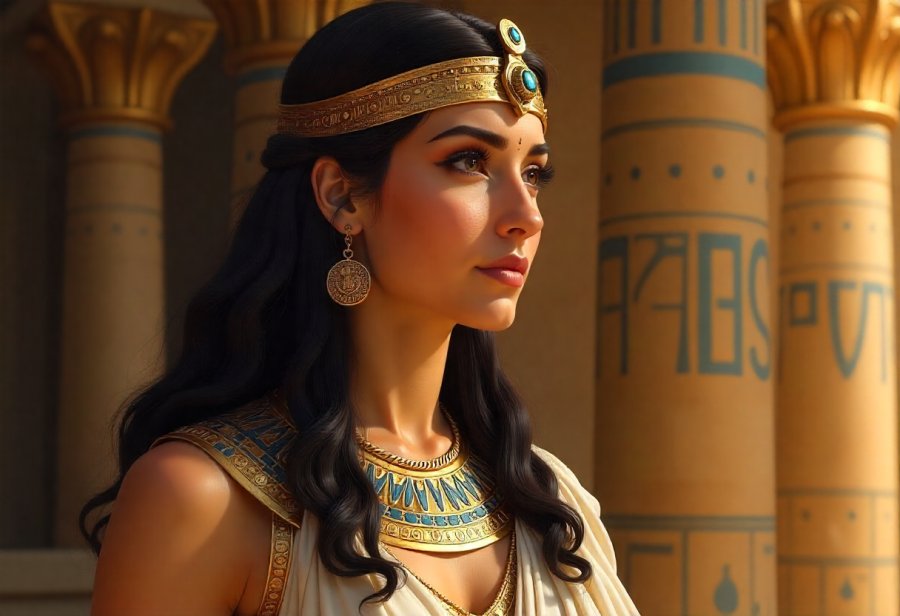
Unveiling Cleopatra VII: The Mind Behind the Last Pharaoh
Cleopatra VII is often remembered as Egypt’s last queen, but her true legacy goes far beyond beauty or romance. She was a brilliant scholar and a shrewd politician, using her intelligence and strategic mind to navigate a turbulent world. Born into the Macedonian Ptolemaic dynasty, she inherited a kingdom rich in culture but fragile in its political stability. Her reign was marked by her ability to forge alliances, outmaneuver rivals, and maintain Egypt’s independence amid rising external threats.
What set Cleopatra apart was her exceptional education and multilingual fluency. She studied philosophy, mathematics, rhetoric, and Egyptian traditions, equipping herself with a broad knowledge base that she wielded to her advantage. Her understanding of her people’s culture and her mastery of diplomacy allowed her to lead with both wisdom and adaptability. She knew that true power depended on influence, relationships, and cultural savvy, not just military strength.
Her leadership was characterized by sharp political insight. From co-ruling with her brother to forming alliances with Julius Caesar and Mark Antony, Cleopatra demonstrated a keen ability to read her environment and act accordingly. Her diplomatic skills, charisma, and cultural literacy enabled her to earn loyalty and respect from diverse audiences—from Egyptian priests to Roman senators. She understood that influence could be gained through words and gestures, making her a master of soft power.
Cleopatra’s story also highlights her patronage of Alexandria’s famed Library and scholarly community. She supported scientific research, translation projects, and the arts, recognizing that knowledge was a vital tool for shaping her legacy. Her investments in education and culture elevated Egypt’s reputation as a center of learning, helping her project strength and sophistication to the world.
Ultimately, Cleopatra’s life shows us that leadership rooted in intellect and strategic thinking can be just as powerful as force. Her ability to adapt, her cultural literacy, and her diplomatic finesse allowed her to rule effectively in a chaotic age. Her legacy challenges stereotypes about female rulers, reminding us that behind her legendary image was a leader whose greatest strength was her mind.
A Turbulent Age: The Political and Cultural Landscape of Cleopatra’s Rise
Cleopatra’s rise to power unfolded amid a complex tapestry of political, cultural, and external influences that shaped her era. Egypt at the time was a vibrant crossroads, blending the legacy of its ancient civilization with the Hellenistic traditions brought by the Macedonian Ptolemaic dynasty. This fusion created a delicate political balance—emphasizing Greek customs at court while deeply rooted in Egyptian religious and cultural traditions. Such a mix often fueled internal tensions, as different factions vied for influence, making governance a constant act of diplomacy and compromise.
The internal landscape was riddled with rivalries and intrigue. Cleopatra inherited a kingdom facing economic hardships, military threats, and fragile alliances. Her earliest challenge was asserting her claim against her brother Ptolemy XIII, with whom she initially co-ruled. Her quick wit and strategic thinking allowed her to outmaneuver rivals within her court, demonstrating her capacity for political agility. Her alliance with Julius Caesar was a calculated move to reclaim her throne, illustrating her understanding that alliances—especially with Rome—were crucial for her survival and Egypt’s independence.
Externally, Egypt’s position grew more precarious as Rome expanded its influence across the Mediterranean. The decline of neighboring Hellenistic states, like the Seleucid Empire, left Egypt increasingly vulnerable to Roman encroachment. Cleopatra recognized that diplomacy, military strength, and alliance-building were essential tools to safeguard her realm. Her diplomatic finesse was evident in her dealings with Roman leaders, where she used language, symbolism, and strategic gestures to project power and legitimacy, even amid external pressures.
Culturally, Alexandria stood as a beacon of learning and innovation. Its famed Library and scholarly community made it one of the most important intellectual centers of the ancient world. Cleopatra understood the power of knowledge as a diplomatic asset. She actively supported translation projects, scientific research, and arts patronage, transforming Alexandria into a hub of cultural exchange. Her investments in education and science weren’t just personal interests—they were strategic moves to elevate Egypt’s prestige and strengthen her political influence.
Throughout her ascent, Cleopatra displayed remarkable adaptability. She anticipated threats and responded with foresight—whether through military campaigns, diplomatic negotiations, or cultural patronage. Her ability to blend Egyptian traditions with Hellenistic diplomacy enabled her to command respect across diverse audiences. In a world dominated by larger powers, her strategic mastery and cultural literacy proved that influence often depends on understanding, relationships, and timing—lessons as relevant today as they were in her time.
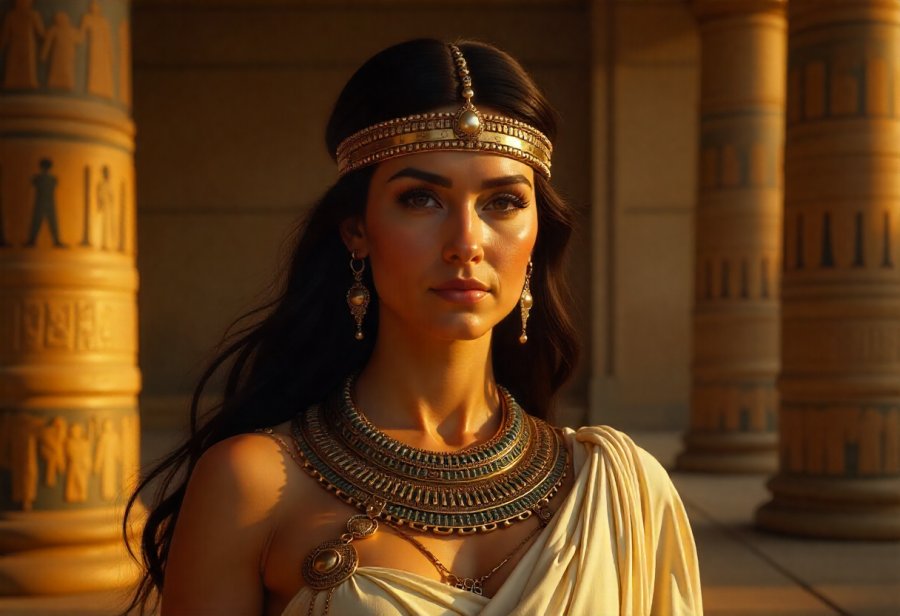
Master of Strategy: Cleopatra’s Leadership in a Chaotic World
Cleopatra’s leadership was characterized by sharp political insight and an instinct for timing. She understood that genuine power stemmed from strategic alliances, cultural influence, and the ability to adapt swiftly to changing circumstances. Her skill in navigating court politics and external threats allowed her to respond with precision, whether negotiating with Roman leaders or managing internal rivalries. Cleopatra’s talent for persuasion and her keen sense of when to act kept her steps ahead of her enemies, ensuring her sovereignty remained intact.
Her relationships with Julius Caesar and Mark Antony were more than personal bonds—they were meticulously crafted political strategies designed to bolster her position. Cleopatra used her intelligence, charm, and diplomatic finesse to forge alliances that extended her influence beyond Egypt’s borders. These partnerships weren’t driven solely by love or vanity but by calculated statecraft aimed at preserving Egypt’s independence amid the rising tide of Roman dominance.
What set Cleopatra apart was her mastery of blending Egyptian traditions with Hellenistic diplomacy. She deeply understood her cultural roots and religious beliefs, which she leveraged to reinforce her legitimacy among her people. At the same time, she adopted Greek and Roman court rituals—using language, symbolism, and gestures to project strength and authority. This cultural fluency enabled her to command respect from diverse audiences, from Egyptian priests to Roman senators, making her a leader who connected through shared symbols and understanding.
Charisma and communication played crucial roles in consolidating her power. Cleopatra projected confidence and intelligence, inspiring loyalty among followers and allies alike. Her speeches, negotiations, and personal interactions were carefully crafted to reinforce her image as a ruler who was both approachable and formidable. Her charisma was backed by strategic thinking, allowing her to adapt her tactics to shifting political landscapes and maintain her influence even in turbulent times.
Despite her brilliance, Cleopatra faced relentless challenges—internal court rivalries, external invasions, and the expanding power of Rome. Her defeat by Octavian marked the end of her reign, but her resilience and strategic acumen left a lasting legacy. She demonstrated that leadership rooted in intelligence, cultural understanding, and foresight could withstand even the most chaotic eras. Cleopatra’s ability to anticipate threats and respond with calculated moves underscores that true power often resides in the mind, a lesson that continues to resonate today.
The Scholar Queen: Cleopatra’s Passion for Knowledge and the Arts
Cleopatra’s influence extended beyond her political maneuvers; her dedication to scholarship and the arts played a vital role in shaping her enduring legacy. She viewed knowledge not just as personal enrichment but as a strategic asset that could bolster her authority and elevate Egypt’s standing in the ancient world. Her deep engagement with philosophy, mathematics, astronomy, and the sciences reflected her belief that wisdom and learning were powerful tools for navigating complex diplomatic landscapes.
Supporting Alexandria’s renowned Library was central to her intellectual pursuits. Cleopatra recognized the library’s potential as a hub for exchanging ideas and fostering innovation. She championed the expansion of its collections and facilitated the translation of texts from various languages, making knowledge accessible to scholars across the Mediterranean. This vibrant environment of inquiry and discovery reinforced Alexandria’s reputation as a center of cultural and scientific advancement.
Her personal interactions with scholars and philosophers underscored her commitment to learning. Cleopatra actively engaged with these thinkers, encouraging debates and the dissemination of new ideas. Her patronage extended to scientific research and artistic endeavors, creating an atmosphere where innovation could thrive. This not only heightened Egypt’s cultural prestige but also strengthened her authority as a ruler who valued wisdom as much as military power.
Beyond her personal interests, her investments in arts and sciences served a broader diplomatic purpose. Cleopatra transformed Alexandria into a magnet for talent from across the Mediterranean, fostering a dynamic space for cultural exchange. Her support helped position Egypt as a beacon of progress and intellectual excellence, reinforcing her image as a learned and sophisticated leader. By championing education and scientific inquiry, she demonstrated that influence could be rooted in knowledge and cultural sophistication.
Her patronage was also a strategic move to project Egypt’s cultural authority beyond its borders. Cleopatra understood that cultivating a reputation for learning and innovation could forge alliances and maintain independence amid foreign pressures. Her support for translation projects, scientific research, and artistic pursuits helped solidify her position as a leader committed to progress, using knowledge as a form of soft power in diplomacy.
Despite resource limitations and internal rivalries, Cleopatra’s unwavering dedication to scholarship never waned. Her intellectual pursuits were integral to her leadership style—an assertion that influence and strength derive from wisdom and cultural literacy. By fostering a thriving environment of learning, she set a precedent that intelligence and cultural patronage could be formidable tools for sovereignty and legacy. Her example continues to inspire, reminding us that true leadership often depends on the power of the mind.
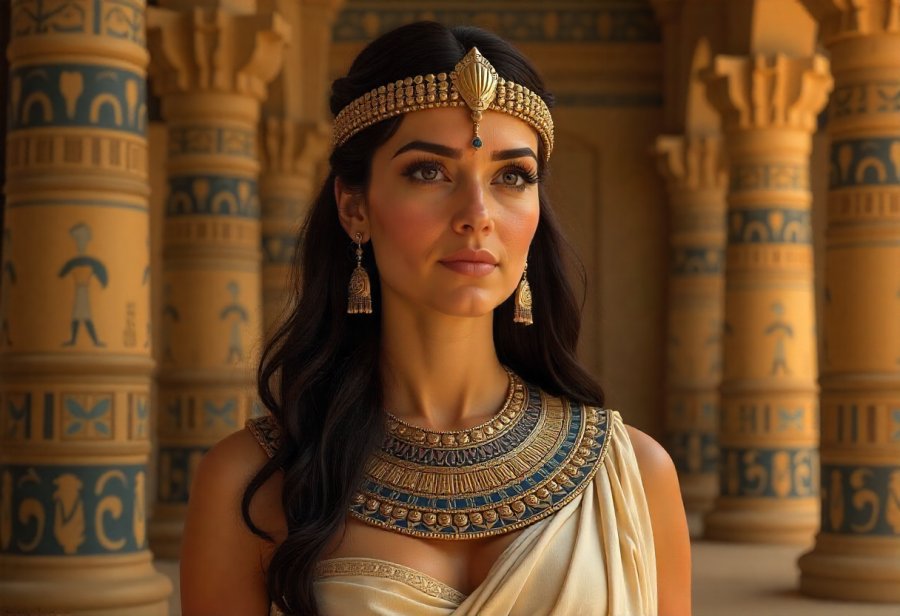
Her Enduring Impact: Rethinking Female Leadership and Cleopatra’s Lasting Legacy
Cleopatra’s story still resonates today, reshaping how we view female leadership throughout history. She broke free from stereotypes that suggest women in power rely solely on charm or appearance. Instead, she exemplifies that intelligence, strategic thinking, and resilience are the real foundations of effective leadership. Her ability to navigate complex political landscapes through diplomacy and wit shows that influence rooted in the mind can leave a lasting legacy, no matter the era or gender.
Modern leadership studies increasingly highlight the qualities Cleopatra embodied—emotional intelligence, cultural literacy, and foresight—as essential tools for success. Leaders today are encouraged to develop these skills to forge alliances, anticipate challenges, and adapt quickly. Cleopatra’s mastery of statecraft reminds us that influence often comes from understanding others, leveraging knowledge, and making strategic moves, not just wielding force or authority.
Her example challenges us to rethink how history perceives female rulers. Cleopatra was not merely a mythic beauty or romantic figure but a shrewd strategist whose intellect and vision shifted the course of history. Her legacy encourages women everywhere to lead with confidence, demonstrating that leadership rooted in wit and wisdom can be as powerful as any traditional form of power. This shift broadens the narrative, inspiring future generations to see strength in knowledge and insight.
Looking ahead, Cleopatra’s life underscores the importance of cultivating qualities like critical thinking, cultural awareness, and adaptability. These traits are vital in today’s interconnected, unpredictable world. Developing such skills prepares leaders to navigate global challenges with agility and resilience, echoing Cleopatra’s own approach to diplomacy and strategy. Her example shows that soft skills—when combined with strategic intelligence—are just as crucial as technical expertise.
Her dedication to learning and cultural diplomacy remains highly relevant. In an age where soft power shapes international relations, her approach offers a timeless lesson. Investing in understanding different cultures, fostering dialogue, and promoting intellectual growth can build bridges and create resilient leadership. Cleopatra’s emphasis on knowledge as a form of influence continues to inspire leaders to view education and cultural exchange as strategic assets.
Her legacy also prompts reflection on how history remembers female rulers. Cleopatra was more than a mythic figure of beauty; she was a leader whose intellect and strategic vision transformed her world. Her example continues to inspire, showing that leadership rooted in insight and resilience can be just as impactful as traditional notions of strength. Embracing these qualities paves the way for a future where influence is defined by wisdom and adaptability.
By embodying intelligence and strategic foresight, Cleopatra set a standard for leadership that transcends gender. Her story encourages us to value the power of the mind in shaping history and influencing the world. Future leaders—regardless of gender—can draw inspiration from her example, recognizing that true authority often resides in the ability to think ahead, understand others, and adapt with purpose.
In embracing Cleopatra’s enduring legacy, we are reminded that leadership is a dynamic blend of knowledge, cultural understanding, and resilience. Her life exemplifies that influence rooted in the mind can change history, inspire change, and leave a mark that lasts through the ages. Her example continues to challenge outdated notions, urging us all to lead with intelligence, integrity, and insight.